

MARBELLA CLUB, SPAIN

I first went to Marbella with my family as a child, and I’ve always associated it with beach clubs, Puerto Banús and superyachts. More recently, I discovered the beautiful Marbella Club, and it is much more my kind of place. It sits right on the Mediterranean along Marbella’s Golden Mile, surrounded by mature gardens, pine trees, bougainvillea and whitewashed buildings, and has been there since 1954. The Hohenlohe family first bought the old finca as a Mediterranean retreat in 1947, before Prince Alfonso turned it into Marbella Club seven years later. It went on to become one of the places that helped put Marbella on the international map.
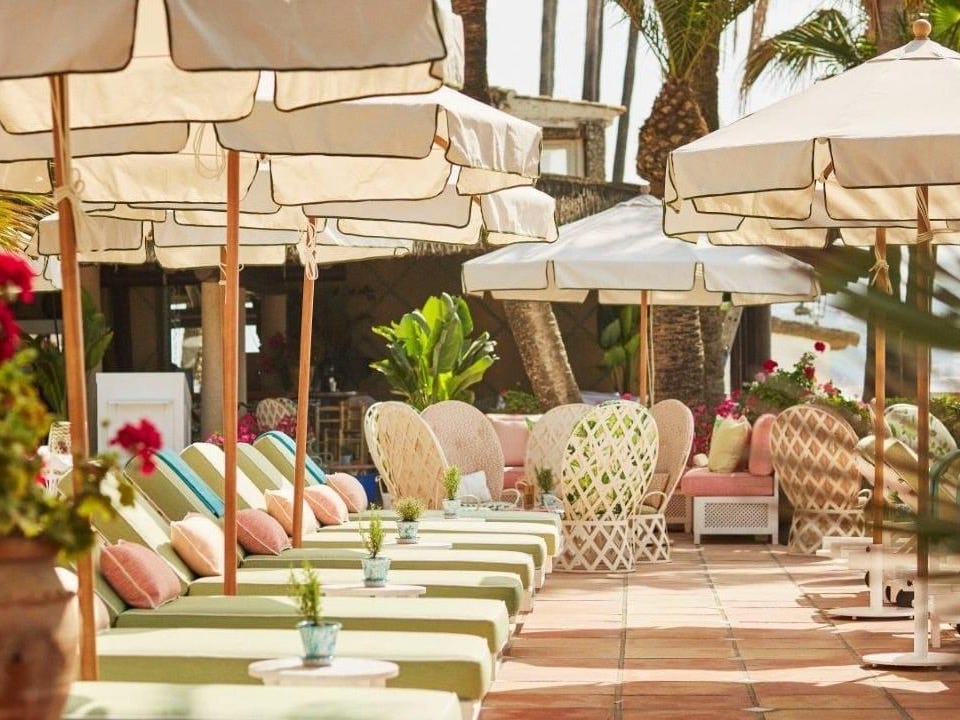
The Beach Club is where I’d head to first. It has been reworked with a nod to 1950s Acapulco, with its original palapa-style roof, minty greens, coral, striped loungers, palms and plenty of rattan. It feels colourful and glamorous without looking overly polished. You can spend the day by the pool or sea, stop for lunch, then stay on for a drink. The food is very Mediterranean with a slight Mexican influence, so expect ceviche, aguachile, grilled fish, seafood and salads rather than anything too formal.
A small tip: Sunday lunch at the Beach Club is still its Grand Buffet, while the à la carte menu runs Monday to Saturday, so it’s worth choosing the day depending on which you prefer.
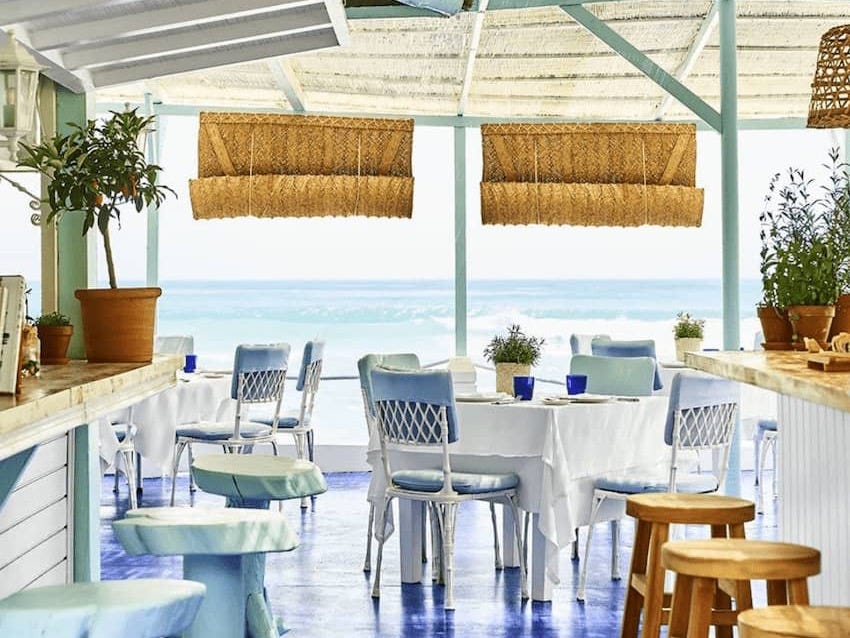
There’s also MC Beach, which is quite different and where I’d end up for lunch more than once. It sits right on the sand and is Marbella Club’s take on a traditional Málaga chiringuito, with blue and white interiors and a much more relaxed seaside feel. The menu is all about Mediterranean seafood, grilled fish, sardines and rice dishes, so it feels a little more local and very easy to imagine lingering there for a long lunch with a cold glass of white wine.
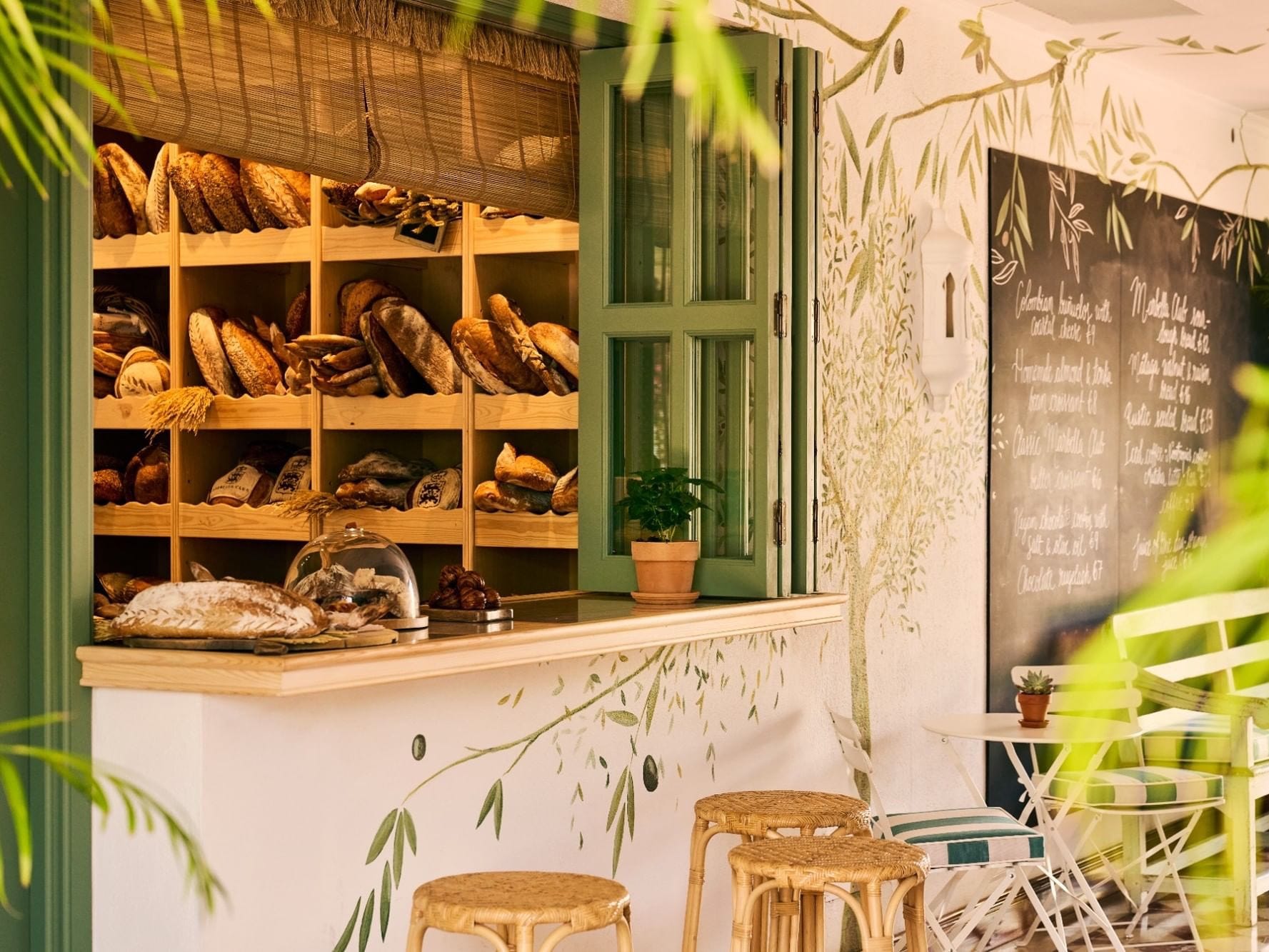
El Obrador is the hotel’s artisan bakery and deli, which immediately makes me like the place even more. Sourdough, pastries and cakes are made throughout the day in the open bakery, and it’s somewhere to stop for coffee in the morning or merienda in the afternoon, with plenty to take away too. They also use produce from the hotel’s 50,000-square-metre Finca Ana María gardens.
What I also love is how seriously the hotel takes sustainability. It runs on 100 per cent renewable energy, supports local seahorse conservation and has its own 50,000-square-metre regenerative farm, Finca Ana María, growing more than 300 varieties of fruit and vegetables for the hotel. In 2024, Marbella Club also received Positive Luxury’s Butterfly Mark certification.
Make sure to stay long enough to see the other Marbella too. The old town is a completely different world from the Golden Mile: narrow pedestrian streets, whitewashed houses covered in flowers, tiny squares and the lovely Plaza de los Naranjos at its centre. Marbella has a much older history than its jet-set reputation suggests, with Roman remains and traces of its Moorish period still visible in sections of the old castle walls. Marbella was still a relatively small agricultural and fishing town before international visitors began arriving in increasing numbers in the mid-20th century.
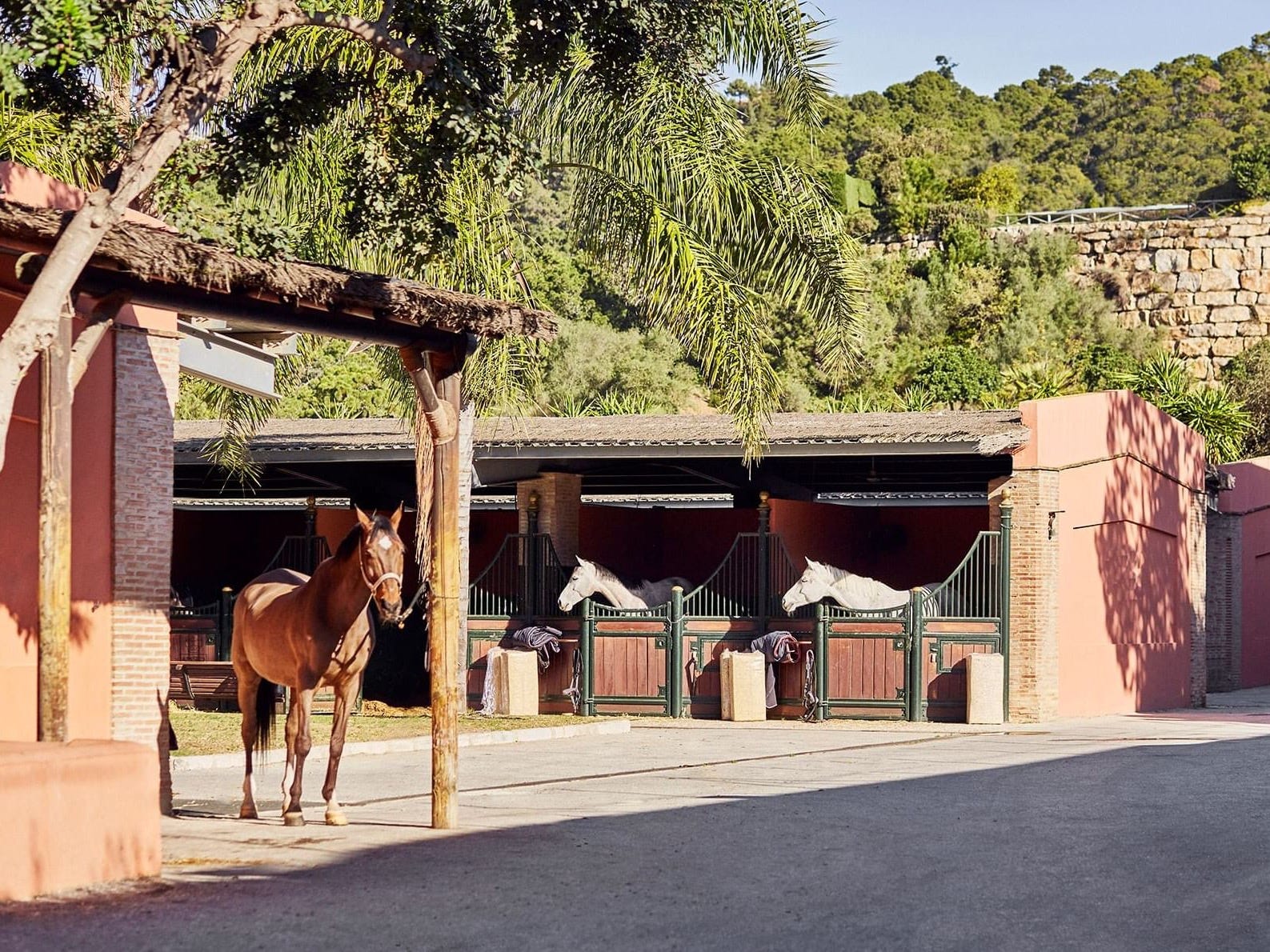
And about 20 minutes inland, in the hills of Benahavís, Marbella Club has its own equestrian centre. The stables are home to Arabian, Spanish, German and French horses, and the centre has even hosted Spain’s National Show Jumping Championships. Guests can ride through pine forests and mountain trails with views back towards the Mediterranean, or book lessons in dressage and jumping.
What I like about Marbella is the contrast between the old Andalusian centre, the mountains behind it and those slightly nostalgic days by the sea.
Layered, not loud
Maximalism is back in the conversation. After years of pared-back schemes, we’re seeing more saturated colour, pattern, ornament, glossy finishes and rooms with much more personality. Architectural Digest has been talking about the return of maximalism and richer colour, while House & Garden has been looking at the same move towards more expressive, layered decorating.

I’m very happy about it, although my version of maximalism is probably a little more restrained.
I’ve always loved interiors with depth and personality, whether that comes from colour and pattern or from a quieter mix of rich materials. I’m just as drawn to beautiful subdued neutrals, a cream sofa against something more tactile, dark timber, old stone, marble and soft natural fabrics, as I am to a lacquered green wall, patterned upholstery and a richly coloured rug.
For me, it is less about whether a room is neutral or colourful and more about whether it has layers, texture and something that gives the room character.
What I like is that people seem less afraid to mix things now. A softly lacquered wall or ceiling. Pattern beside pattern when the colours really work together. Glossy paint against something matte and tactile. A great lamp, an old table, a beautiful rug, books, art and ceramics.
Those are the rooms I keep pinning.
But it still has to feel considered. The colours have to work together, the pattern has to feel balanced, and every piece should add something rather than simply fill the room. I love layers, but I also love restraint.
That’s the version of maximalism I’m interested in.

Designers such as Kelly Wearstler, Laura Gonzalez and Martin Brudnizki have been doing this brilliantly for years. Their rooms show how much colour, pattern and texture you can use when everything has been considered properly.

For the bees
I was watching A Current Affair this week and saw a story about what’s happening to bees here in Australia.

A tiny parasite called the varroa mite is spreading through bee colonies across eastern Australia. It is barely visible, yet it is considered one of the greatest threats to honey bees worldwide. Varroa has affected bees across much of the world for decades, but Australia had managed to remain free of it until it was detected near the Port of Newcastle in 2022. The mites attach themselves to European honey bees spreading viruses through the hive.
What stayed with me most was seeing what this is doing to both the bees and the people who care for them. Whole colonies can disappear, sometimes after years of being tended by beekeepers who know their hives intimately.
We rely on bees for far more than honey. By moving pollen from flower to flower, they help plants produce fruit and seeds. Many of the foods we eat benefit from insect pollination, including apples, berries, cherries, almonds, avocados and melons. Native bees also help pollinate wild plants, supporting the wider ecosystems around them.

A social enterprise I’ve been following for a while, Save the Bees, has an initiative called Bee the Cure, which focuses on education, advocacy, protecting bees and creating more bee-friendly environments. It also helps connect people who find swarms with beekeepers who can safely relocate them.
There is encouraging work happening around varroa too, with beekeepers and researchers continuing to look for better ways to manage the mite as resistance to some existing treatments begins to appear.
Bee Happy Organic Honey
Bee Happy Organic is a family-run Western Australian apiary with more than 65 years of beekeeping behind it. Their certified-organic Jarrah honey comes from bees foraging in remote WA forests and is raw, unfiltered and cold-extracted. Jarrah honey is quite special in itself, with a deep caramel flavour and naturally high antimicrobial activity. Bee Happy tests each batch for its Total Activity rating, which measures that antimicrobial strength. I love that it feels so tied to the landscape it comes from.
I always look for raw, unfiltered honey because it hasn’t been pasteurised or heavily heated, helping it retain more of its naturally occurring enzymes, antioxidants and pollen.
Plant something for the bees
One of the simplest ways to help bees is to give them more places to feed.
In Australia, grevillea, bottlebrush, banksia, native daisies and westringia are all good choices. Lavender, rosemary, thyme, basil and mint work well too, especially in pots and smaller gardens. Wherever you live, choose a mix of plants that flower at different times of year so bees have a steady source of pollen and nectar.
A cute bee fact: Bees can sleep in flowers. Some solitary bees will tuck themselves into blossoms overnight.
#PlantForTheBees
A little travel, a little colour and something for the bees. Hope you found something to love this week. See you next Sunday.
Anna x